
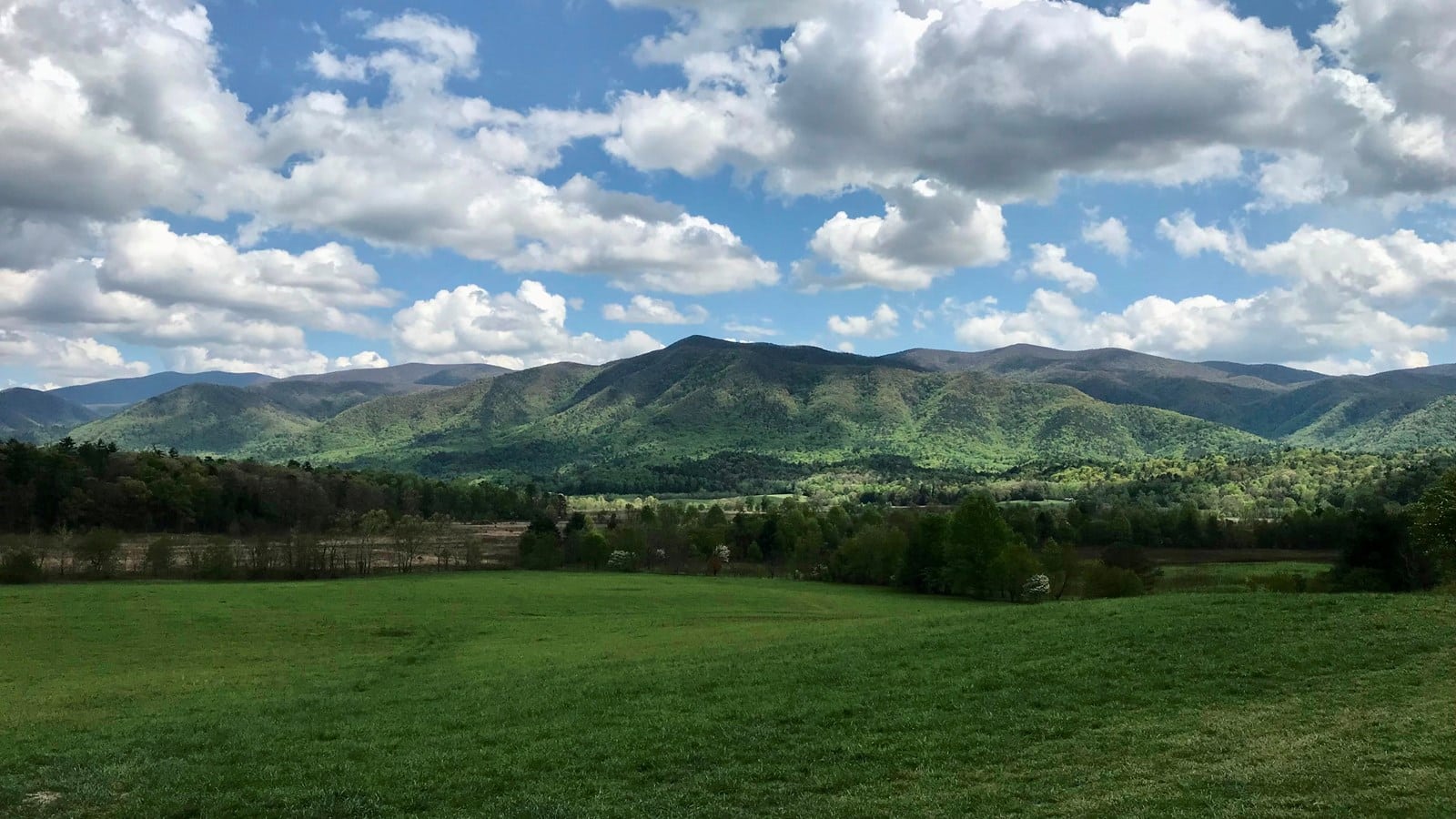
The same 11-mile road gives you four different views of Cades Cove. You do not need a new route for each season; you need to notice what changes in the fields, the woods, the light, and the crowd around you. This is a practical guide to choosing a visit—and making photographs that look like the day you actually found.
Spring: watch the tree line
The valley greens up before the higher ridges. Look beyond the fields and you can often see that difference in one frame: fresh leaves below, darker forest above. Rain is common, so a damp morning may offer soft light and low cloud instead of a clear mountain view. Walk only where access is allowed, and leave wildflowers where they grow.
Summer: early light, deep shade
By summer, the trees can hide some of the long views you see in winter, but the open meadows remain. Aim for the cooler morning or late-day light rather than the harsh middle of the day. Expect traffic and give yourself more time than the 11 miles suggest. Vehicle-free Wednesdays are typically scheduled from May through September; verify the current calendar before planning a bicycle or walking day around one.
Autumn: color is a moving target
Fall brings the busiest stretches of the year. Color changes with elevation, weather, and the week you arrive; no single date is a promise. Instead of chasing a predicted peak, look for a field edge, a church roof, or a split-rail fence against whatever color is actually there. A cloudy morning can be better for the details than a bright afternoon. See our fall foliage guide for more planning ideas.
Winter: the valley opens up
Snow is possible, not dependable. The more reliable winter change is the loss of leaves: cabins and ridges become easier to see, and the quiet shapes of trees carry the scene. Read our winter guide before you go. The Loop Road is generally open year-round but can close for weather.
A better way to photograph the cove
Use the paved pullouts. Let traffic pass before setting up, and never stop in the lane for wildlife. A long lens or binoculars gives you a better view without crowding animals; stay at least 50 yards from bears. The churches and homesteads make strong subjects in every season, but they are protected places, not props. Do not climb fences, enter closed areas, or move objects for a cleaner frame.
Before leaving, check current NPS conditions, the road schedule, and the weather. The loop is open sunrise to sunset when conditions allow. A parking tag is required if you park for more than 15 minutes. Most of all, leave room in the day to stop and look. The best photograph may be a small detail you did not come looking for.
Source check: October 6, 2026. Seasonal timing and road access can change; confirm current NPS notices before travel.