
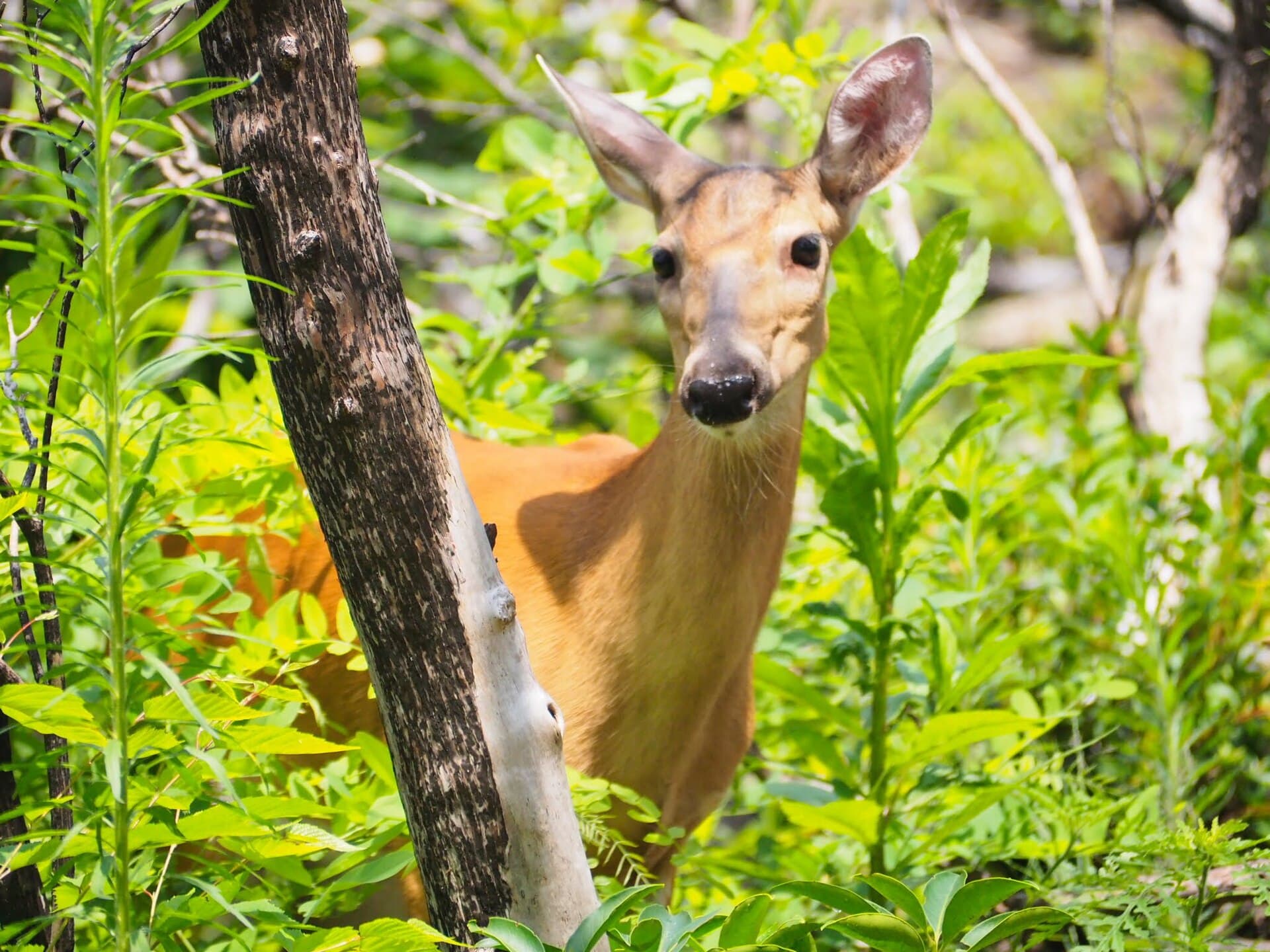
Fall changes the look of Cades Cove. The fields turn tawny, the forest edge grows easier to see, and a slow drive gives you time to notice what is moving. White-tailed deer and wild turkeys are the animals you are most likely to spot. Black bears live here too, but no particular sighting is guaranteed.
Bring binoculars, start early if you can, and keep the camera within reach. The 11-mile Loop Road lets you watch the open fields from your vehicle. If you stop, use a designated pullout and leave the road clear for other drivers and emergency vehicles.
What you may see
White-tailed deer
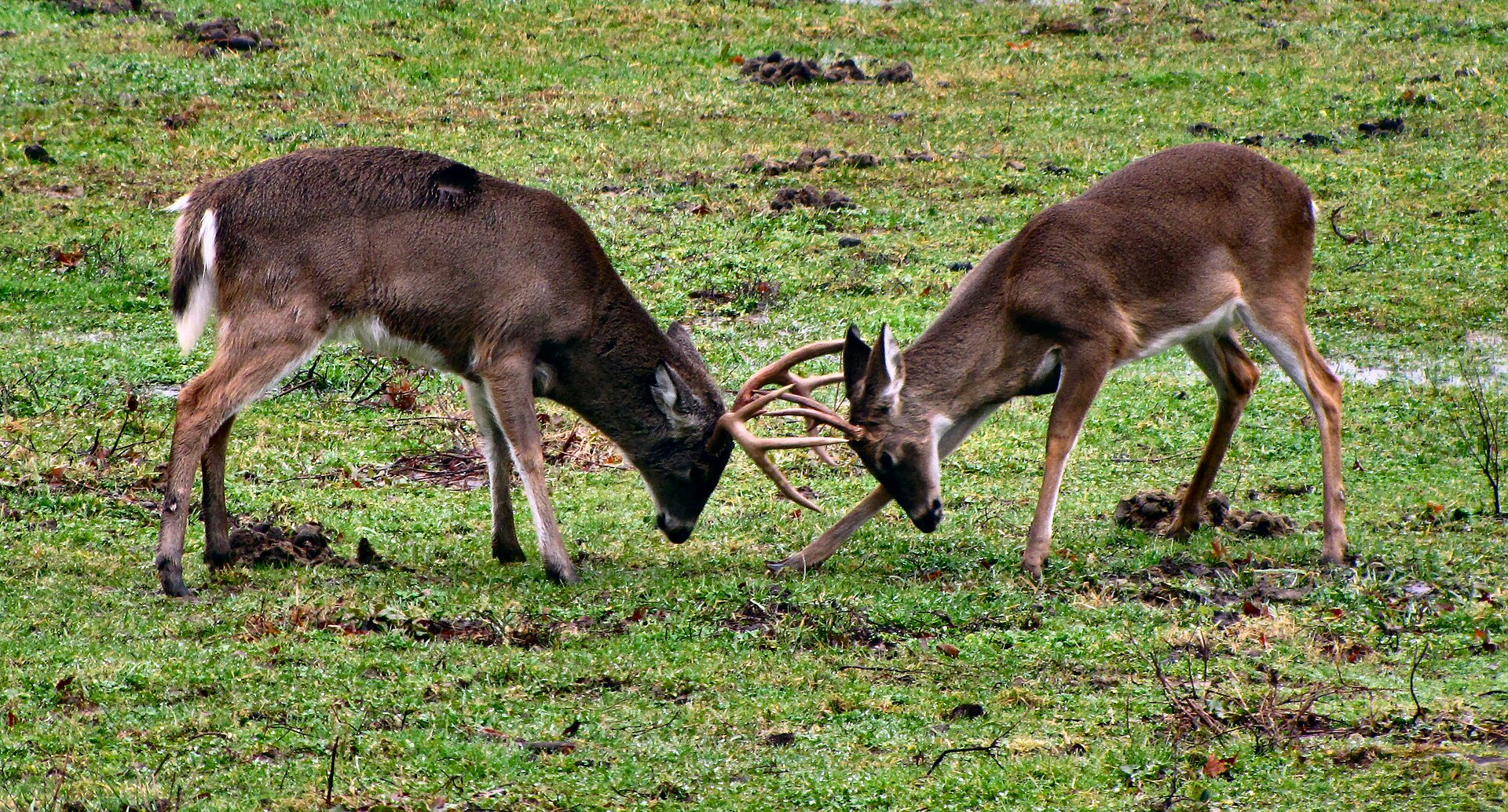
Scan the meadows and the strips where grass meets woods. Deer often feed in the open during the cooler hours. In fall, watch for bucks as well as does, but give every animal room to move. Our deer guide has more on what you are seeing.
Black bears
Bears can appear along field edges or among the trees. They are most active around dawn and dusk, according to the National Park Service. Watch from your car or a safe distance; do not follow a bear into a field or stop in the roadway for a photograph. See our black bear guide before you go.
Wild turkeys and other birds
Turkeys are hard to miss when they cross an open field, but smaller birds reward a quieter look at fence lines and woodland edges. Binoculars help more than a longer walk into the meadow. For species and viewing tips, start with our birding guide.
Bobcats
Bobcats live in Great Smoky Mountains National Park, but they are elusive. A glimpse would be unusual, not something to plan your drive around. Our bobcat guide explains more without promising a sighting.

Why the open fields matter
The Cove’s meadows are not simply empty space between the historic buildings. The National Park Service uses prescribed fire to keep woody plants from taking over parts of the valley. These open habitats provide cover and food for deer, turkeys, pollinators and ground-nesting birds. The park describes this work in its Cades Cove prescribed-burn update.
Watch well, and leave room
- Stay at least 50 yards from bears and 25 yards from elk elsewhere in the park. If an animal changes its behavior because of you, move farther away.
- Never feed wildlife or approach it for a photograph. Use a zoom lens or binoculars instead.
- Stay in your vehicle when viewing wildlife from the road. For a longer look, pull completely into a designated pullout; never block the Loop Road.
- Check current National Park Service wildlife-viewing guidance before your trip. Field access can change when bears are present.
A good wildlife drive is unhurried. Look across the fields, then back toward the tree line. If nothing appears at one stop, keep going. The Cove is worth seeing even on a quiet day.
Lead photograph: National Park Service, public domain. The Cades Cove bucks photograph is credited in its caption above.